
HUMAN ANATOMY,PHYSIOLOGY AND PATHOPHYSIOLOGY – II
Keywords:
Anatomy – Study of the structure of the human body. Physiology – Study of the normal functions of the body. Pathophysiology – Study of functional changes caused by diseases. Organ Systems – Groups of organs working together to perform specific functions. Homeostasis – Maintenance of a stable internal environment in the body.
Synopsis
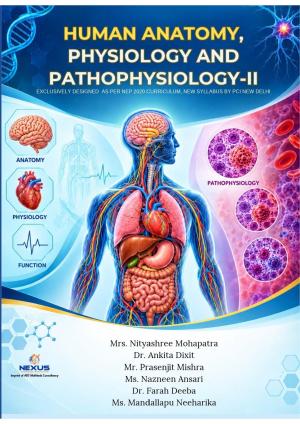
Human Anatomy, Physiology and Pathophysiology – II is an important branch of medical and health sciences that deals with the structure of the human body, the normal functioning of various organs and body systems, and the changes that occur in the body due to diseases. It provides a detailed understanding of the human body's organization and the relationship between its structures and functions.
Anatomy is the scientific study of the structure, shape, size and location of different organs and tissues of the human body. It helps in understanding the arrangement of body parts and their relationships with one another.
Physiology is the study of the normal functions and activities of different organs and systems of the body. It explains how the heart pumps blood, how the lungs perform respiration, how the kidneys regulate body fluids and how the nervous system controls various body activities.
Pathophysiology is the study of functional changes in the body caused by diseases or injuries. It explains the causes, mechanisms, signs and symptoms, and effects of diseases on normal body functions.
This subject covers the structure and functioning of major body systems, including the cardiovascular, respiratory, digestive, urinary, nervous, endocrine and reproductive systems. It also provides knowledge about common disorders and their effects on the human body.
The study of Human Anatomy, Physiology and Pathophysiology – II is essential for understanding disease processes, identifying abnormalities and developing a scientific foundation for the diagnosis, prevention and treatment of various health conditions. It plays an important role in medical education and healthcare practice.
Downloads
Published
November 19, 2026
Copyright (c) 2026 Nexus Knowledge Publication (Imprint of AKT Multitask Consultancy)
License

This work is licensed under a Creative Commons Attribution-NonCommercial-NoDerivatives 4.0 International License.
Details about this monograph
ISBN-13 (15)
978-81-180323-2-8
How to Cite
Mrs. Nityashree Mohapatra, Dr .Ankita Dixit, Mr. Prasenjit Mishra, Ms. Nazneen Ansari, Dr. Farah Deeba, & Mandalapu Neeharika. (2026). HUMAN ANATOMY,PHYSIOLOGY AND PATHOPHYSIOLOGY – II. Nexus Knowledge Publication (Imprint of AKT Multitask Consultancy). https://doi.org/10.64474/