
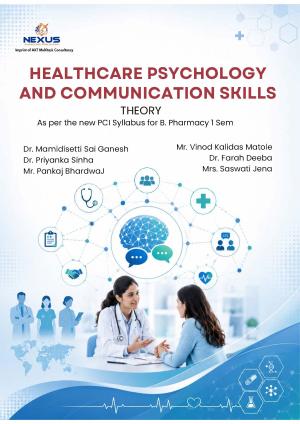
HEALTH CARE PSYCHOLOGY AND COMMUNICATION SKILLS
Keywords:
HEALTHCARE, PSYCHOLOGY, COMMUNICATION SKILLS
Synopsis
Background: Clinical outcomes in modern healthcare are profoundly shaped by factors beyond biomedical interventions. A patient’s psychological state, coping mechanisms, and the quality of their interaction with medical providers are critical determinants of recovery, mental health resilience, and systemic healthcare efficiency.
Purpose: This discipline aims to equip healthcare professionals with the psychological frameworks and interpersonal communication tools necessary to deliver empathetic, safe, and collaborative care. It addresses the emotional barriers to treatment, mitigates provider burnout, and seeks to optimize patient satisfaction and clinical safety.
Core Methodology: The integration of behavioral sciences into clinical practice relies on evidence-based psychological and communication methodologies:
- Evidence-Based Communication Frameworks: Utilizing structured models like SPIKES for breaking bad news, motivational interviewing for behavioral change, and the Calgary-Cambridge guide for medical interviews.
- Psychological Assessment & Support: Identifying psychological distress, understanding the stages of grief, navigating patient non-adherence, and recognizing psychosomatic factors in chronic disease management.
- Conflict Resolution & Interprofessional Communication: Applying active listening, verbal de-escalation, and clear peer-to-peer data sharing (such as SBAR) to prevent clinical errors and manage team conflicts.
- Patient-Centered Communication: Developing empathy, active listening, decoding non-verbal cues, and navigating cross-cultural communication gaps.
- Psychology of Illness: Analyzing patient responses to acute, chronic, or terminal diagnoses, and addressing the psychological impacts of pain and hospitalization.
- Behavioral Change & Compliance: Understanding theories of health behavior to help patients adopt healthier lifestyles and strictly adhere to medication regimens.
- Professional Well-being: Stress management strategies, emotional resilience training, and identifying signs of compassion fatigue or burnout among healthcare staff.
Published
September 10, 2026
Copyright (c) 2026 Nexus Knowledge Publication (Imprint of AKT Multitask Consultancy)
License

This work is licensed under a Creative Commons Attribution-NonCommercial-NoDerivatives 4.0 International License.
How to Cite
Ganesh, D. M. S. G., Sinha, D. P. S., Bhardwaj, M. P. B., Matole, M. V. K. M., Deeba, D. F. D., & Jena, M. S. J. (2026). HEALTH CARE PSYCHOLOGY AND COMMUNICATION SKILLS. Nexus Knowledge Publication (Imprint of AKT Multitask Consultancy). https://doi.org/10.64474/